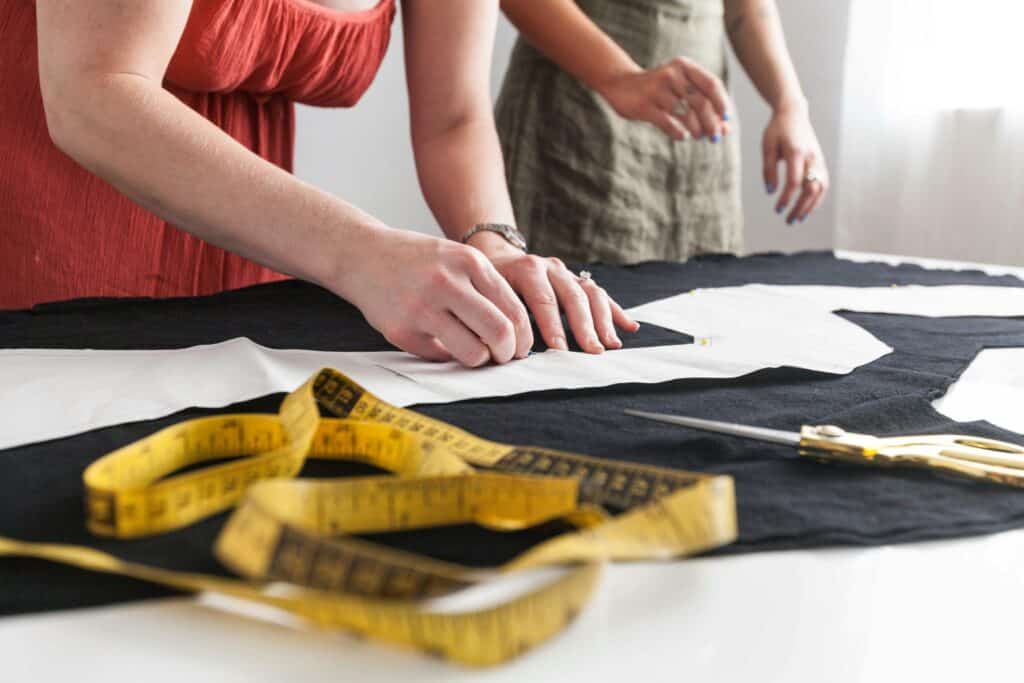
Expert Apparel Marker Making: Maximizing Fabric Yield and Production Efficiency
The Silent Profit Killer: Fabric Waste in Production
In apparel manufacturing, fabric typically accounts for 50% to 70% of the total cost of a garment. Even a 2% or 3% decrease in fabric efficiency can result in thousands of dollars in lost revenue over a single production run. Apparel marker making is the strategic process of arranging pattern pieces on a fabric layout to minimize waste and ensure every inch of material is utilized to its full potential.
At XYZ Pattern, we bridge the gap between technical design and the realities of the cutting floor. Our digital marker-making services go beyond basic layouts; we provide engineered solutions that protect your margins, reduce your environmental footprint, and ensure your factory receives a “plug-and-play” cutting blueprint.
Digital Markers vs. Manual Layouts
The transition from manual to digital marker making has revolutionized production accuracy. By utilizing advanced CAD environments, XYZ Pattern offers a level of precision that manual layouts simply cannot match.
Optimized Nesting: We use sophisticated algorithms and expert manual oversight to “nest” pattern pieces together, filling gaps that would otherwise become scrap.
Fabric-Specific Strategies: Not all fabrics are created equal. We customize marker layouts based on fabric width, weight, and “nap” (the direction of the fibers).
Print & Plaid Matching: For brands working with stripes, plaids, or engineered prints, we create markers that ensure perfect alignment across seams, maintaining the luxury aesthetic of your brand while still prioritizing yield.
Tailored for Every Cutting Method
Whether you are producing locally in Los Angeles or working with a high-volume factory overseas, your markers must be compatible with specific cutting technologies. We provide high-efficiency markers optimized for:
Manual Spreading & Cutting: Clear, easy-to-read paper markers that guide manual cutters with precision.
Automated CNC Cutting: Precision digital files (DXF/ISO) that integrate directly into Gerber, Lectra, or Morgan automated cutting systems.
Laser Cutting: Specialized layouts designed to minimize heat-distortion zones and maximize speed for technical and performance textiles.
The Role of Markers in Sustainable Fashion
Sustainability in fashion is often discussed in terms of “organic” or “recycled” fibers, but true sustainability starts with efficiency. Every yard of fabric that ends up on the cutting room floor represents wasted water, energy, and labor. By investing in professional marker making, your brand is taking a direct, measurable step toward “Zero Waste” manufacturing. Our reports provide you with an exact “Yield Percentage,” giving you total transparency into your material consumption.
Integrating Markers into Your Product Development
At XYZ Pattern, we don’t treat markers as an afterthought. We integrate fabric efficiency into the earlier stages of Pattern Grading. By understanding the width of your production fabric early on, we can suggest minor adjustments to seam allowances or design details that could drastically improve your yield. This holistic approach ensures that when you finally “push the button” on production, your garments are as cost-effective as they are beautiful.
At XYZ Pattern we offer full service 2D patterns, 3D prototyping, Full Service Development, Grading and Markers. Contact us today to learn more.
FREQUENTLY ASKED QUESTIONS
What is a marker in apparel manufacturing? A marker is a thin sheet of paper (or a digital file) that contains all the pattern pieces for all the sizes of a specific garment, arranged in the most efficient way possible for cutting. It serves as a guide for the cutting room, ensuring that fabric waste is minimized and that all pieces are cut according to the correct grain line.
How does marker efficiency affect the cost of a garment? Marker efficiency directly impacts the “yield,” or the amount of fabric used per garment. A higher efficiency percentage means less wasted fabric, which lowers the material cost per unit. For large production runs, increasing marker efficiency by even a small percentage can save a brand thousands of dollars in raw material costs.
What information is needed to create an accurate apparel marker? To create a production-ready marker, a marker maker needs the graded digital patterns, the exact usable width of the production fabric (excluding the selvage), and the fabric’s characteristics, such as whether it has a directional nap, a one-way print, or requires stripe/plaid matching.
Can markers be used for different fabric widths? No, a marker is specific to a particular fabric width. If you change from a 45-inch wide fabric to a 60-inch wide fabric, a new marker must be created to re-optimize the layout and take advantage of the additional width to improve yield.